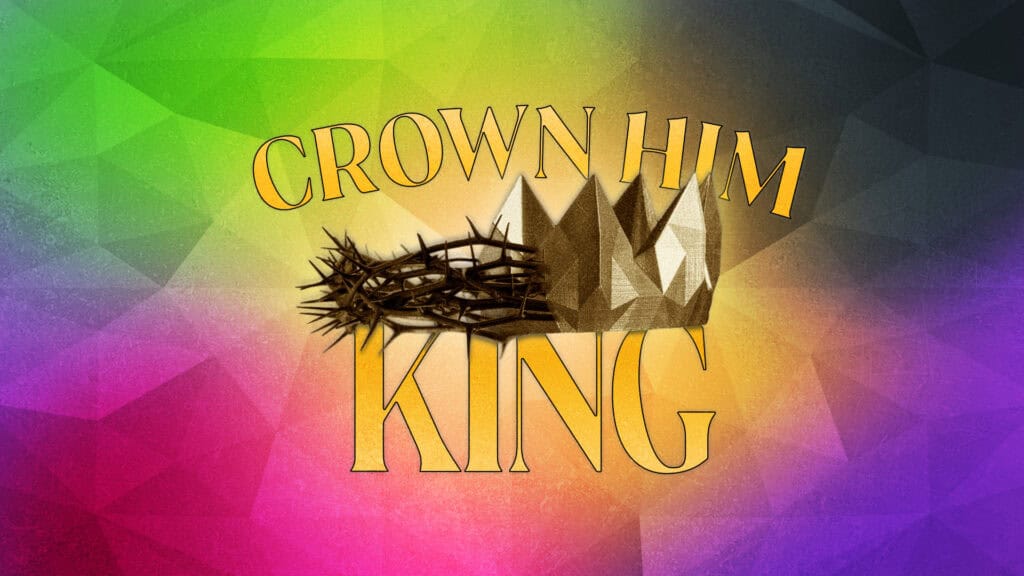
On a dark and rainy evening, the church gathered for a Good Friday service—not merely to observe a somber tradition, but to journey to the hill of Calvary and witness the profound moment when Jesus was crucified. While the events of that day were horrific, this service aimed to reveal a spark of hope, illuminating God's love in a way that transforms how believers walk through life.
On Saturday, May 6th, 2023, Charles Philip Arthur George—known as Charles III—was crowned King of England in Westminster Abbey. The televised coronation displayed remarkable pomp and circumstance, with thousands lining the streets, hundreds filling the abbey, and millions watching online as Charles became king.
During the ceremony, Charles invoked an oath to serve as king, was anointed with holy oil, received prayers and speeches, and was presented with extensive regalia known as the crown jewels. This collection included multiple crowns—one worn during the coronation and a lighter one for departure—along with three swords, a scepter, and numerous other symbols of royal authority. The ceremony concluded with the people crying out their allegiance: "Long live the king."
Throughout history, nations across the world have employed similar coronation ceremonies to acknowledge their kings. Despite differences in specific rituals and practices, these ceremonies tend to follow a common template:
What many may not realize is that this very template plays out in the Easter story.
Roman soldiers gave Jesus a coronation, though they intended it as mockery and insult—an attempt to expose Him as a false king. Yet despite their best efforts to bruise, bloody, and beat Him, they unknowingly and ironically gave Him a genuine coronation, acknowledging the truth they could not see: He truly was the King.
What the soldiers intended as brutality became the very means by which Jesus brought about a spiritual coup, unseating the kingdom of sin that had ruled humanity since the fall.
This message is part of a three-part Holy Week series from the book of Mark titled "Crown Him King." The previous message examined Palm Sunday and the triumphal entry into Jerusalem from Mark chapter 11, revealing an important truth: Jesus was already the King before His coronation.
This may seem backwards—doesn't one need to go through a coronation ceremony to become king? Actually, no. King Charles had been serving as king for nearly eight months before his coronation, having assumed the role when Queen Elizabeth passed away in September, months before his May coronation.
In other words, a coronation doesn't make someone a king; it simply acknowledges the truth and reality that the person already is king. The Roman soldiers attempted to pretend Jesus was not a king, but they utterly failed, unknowingly giving Him a coronation that acknowledged the truth of who He already was.
The main passage for this teaching comes from Mark 15:16-37. At this point in the narrative, Jesus had already been arrested and endured a sham trial before the Sanhedrin—the Jewish high court—held illegally in the middle of the night. He was then brought to Pilate and handed over to the Romans. After trials and conversations involving Herod, Jesus was pronounced guilty and condemned to execution by crucifixion. Pilate handed Him over to the soldiers to be prepared for crucifixion.
The passage describes how the soldiers led Jesus inside the palace and called together the whole battalion—not just a handful of soldiers, but sixty men who would serve as the audience for their cruel joke. They could not fathom that this man from backwater Nazareth, a carpenter turned itinerant preacher, could possibly be a king. So they decided to have some fun at His expense with a mock coronation, not realizing they were actually acknowledging what they could not see but what was entirely true.
The elements of their mockery perfectly mirrored the traditional coronation template:
Verse 17 states they clothed Him in a purple cloak. Purple was the color of royalty because it was extremely difficult and expensive to produce. Only the wealthy could afford such clothing, which is why it was reserved for kings. Somehow these soldiers obtained a piece of purple cloth and placed it on Jesus, thinking it hilariously ironic. Yet they had just given Him a royal robe.
They crowned Him, but not with a beautiful golden, bejeweled crown. Instead, they twisted together branches covered in thorns. Whether it was a crown of thorns plant, a thorny shrub from the area, or branches from a date palm with sharp spikes, the result was the same: when twisted together, some thorns pointed outward while others pointed inward, stabbing Him in the head, drawing blood, and causing immense pain. Yet despite their cruelty, they had crowned Him.
The soldiers began to hail Him: "Hail, King of the Jews!" They spoke these words as mockery, not realizing that everything they said was one hundred percent true—He truly was the King of the Jews. As they hailed Him, their cruelty intensified.
Verse 19 describes how they struck His head with a reed. Matthew 27:29 reveals they first placed this reed in His right hand as a mock scepter, then took it from Him and used it to beat Him, driving the thorns deeper into His skull. While beating Him, they pretended to honor Him, kneeling down in homage. But rather than kissing His feet or ring as subjects would their king, they spat on Him.
When their cruel game ended, they led Jesus to Calvary—to Golgotha, the place of the skull. There, His enthronement occurred. Typically in a coronation, the king or queen ascends a raised platform to sit on a throne high above everyone else. But for Jesus, instead of being raised onto a throne, He was raised up on a cross.
As He hung on that cross, instead of people crying out "Long live the king," they mocked Him: "If he really is the king of the Jews, let him come down." Rather than hoping for the king's long life, they waited for His last breath.
The soldiers intended this coronation to be a joke, a sham, to expose Jesus as a fake. Yet it accomplished the opposite of what they thought.
The book of Revelation provides a glimpse of King Jesus at the end of all things, and He looks vastly different from the humble king riding a donkey into Jerusalem on Palm Sunday.
In Revelation 19, Jesus appears on a white horse, wearing a robe dipped in blood, wielding an iron rod instead of a wimpy reed, and declared not just king of the Jews but King of Kings. In verse 12, after describing His eyes as flames of fire, the apostle John writes: "And on his head are many diadems."
The term "diadems" refers to crowns used as symbols of the highest ruling authority in a given area, often associated with kingship. John was communicating that Jesus wears the crown that is above all other crowns—He has on His head many diadems because everything comes under Him. That is why He is the King of Kings, the Lord of Lords—because He wears the crown of crowns.
But before He wore the crown of crowns, before He had many diadems on His head, He wore a crown of thorns. And He bore those thorns for the Roman soldiers, for the Jews who mocked Him, and for all of humanity.
When the soldiers gave Jesus this mock coronation, inadvertently acknowledging Him as king, something else happened simultaneously. They inadvertently created the very opening for Jesus to unseat the previous king—and this doesn't refer to the Roman Caesar.
On the spiritual plane, sin had been ruling and building an empire since Adam and Eve ate the forbidden fruit. Earthly kingdoms had risen and fallen, but sin continued to rule and reign through it all. Every single human born with breath entered the world under that empire, and the taxes of that empire were steep: the payment was death.
Romans 6:23 declares that "the wages of sin are death." If the citizens of sin's kingdom pay with their physical lives, they become separated from God and can never enter His kingdom. That is why Jesus, the Son of God and God the Son, took on human flesh to enter the story and do for humanity what it could not do for itself. He paid the tax. He went into battle and defeated the foe.
Second Corinthians 5:21 contains a strange and shocking verse: "For our sake God made him to be sin who knew no sin, so that in him we might become the righteousness of God."
Jesus was the only man to ever live without any sin. He was not under the empire of sin—sin was never His king. Yet God made Him to be sin.
Returning to the coronation scene with this understanding transforms the meaning of what occurred. When viewing the Romans treating Jesus with mockery, beating, and spitting, their goal was to expose Him as a fake. But Revelation 19 confirms He is not a fake.
When God made Him who knew no sin to be sin, the Romans were actually beating the empty king of sin. Through their physical instruments of torture, as Jesus took the beating, it was actually coming against sin itself. Sin was defeated, vanquished, toppled, and unseated. Jesus could then take His rightful throne.
This is why the day is called Good Friday. What Jesus endured was not good—it was horrific. Yet for humanity to be allowed to come out from under such an evil king and enter a kingdom full of grace, love, joy, peace, and life—that is good. That is great.
For those who have never given their lives to this good King who paid the debt humanity owed, the invitation stands to make this Good Friday the night of stepping out from underneath the sin empire and into His kingdom.
While the world weeps over global pain, this night can be one of joy for those who allow Jesus to wash their sin away and bring them into new life. Many people, upon realizing the Easter story is not merely an annual Christian tradition but a true and personal story, mark that moment with prayer.
The message also addresses those who have known this story their entire lives, perhaps heard it preached at many Good Friday services, believed it at one point, but now find themselves questioning, struggling, or doubting. Even in doubts and questions, Jesus remains fully present, wearing the crown over all other crowns, worthy of trust and loyalty.
The service concluded with communion, which seemed appropriate while contemplating the cross and Jesus's broken body and shed blood. This holy sacrament invites followers of Jesus to participate by coming to the elements while thinking of Christ, going to the coronation in their minds, seeing Him enthroned on that cross, and realizing what He accomplished.
For those not yet followers of Jesus, the encouragement was to have a conversation with God rather than partake in the elements—not to keep something from them, but because Jesus has something better to offer: God taking on human flesh to live the life humanity should have lived but didn't, then dying the death humanity should have died but didn't.
The evening ended with the reminder that Jesus went through this mock coronation for each person. The invitation was to leave remembering His sacrifice and doing so in remembrance of Him.
This Good Friday message reveals that what appeared to be humanity's darkest hour was actually the moment of victory. The crown of thorns that symbolized mockery and suffering became the instrument of salvation. The cross that represented shame and defeat became the throne of the King of Kings.
Before Jesus wore the crown of crowns, He wore a crown of thorns—for Roman soldiers, for mocking Jews, for struggling believers, and for every person who would ever need rescue from the kingdom of sin. The coronation that was meant to be a joke became the reality that changed everything, toppling sin's empire and establishing a kingdom of grace that will last forever.